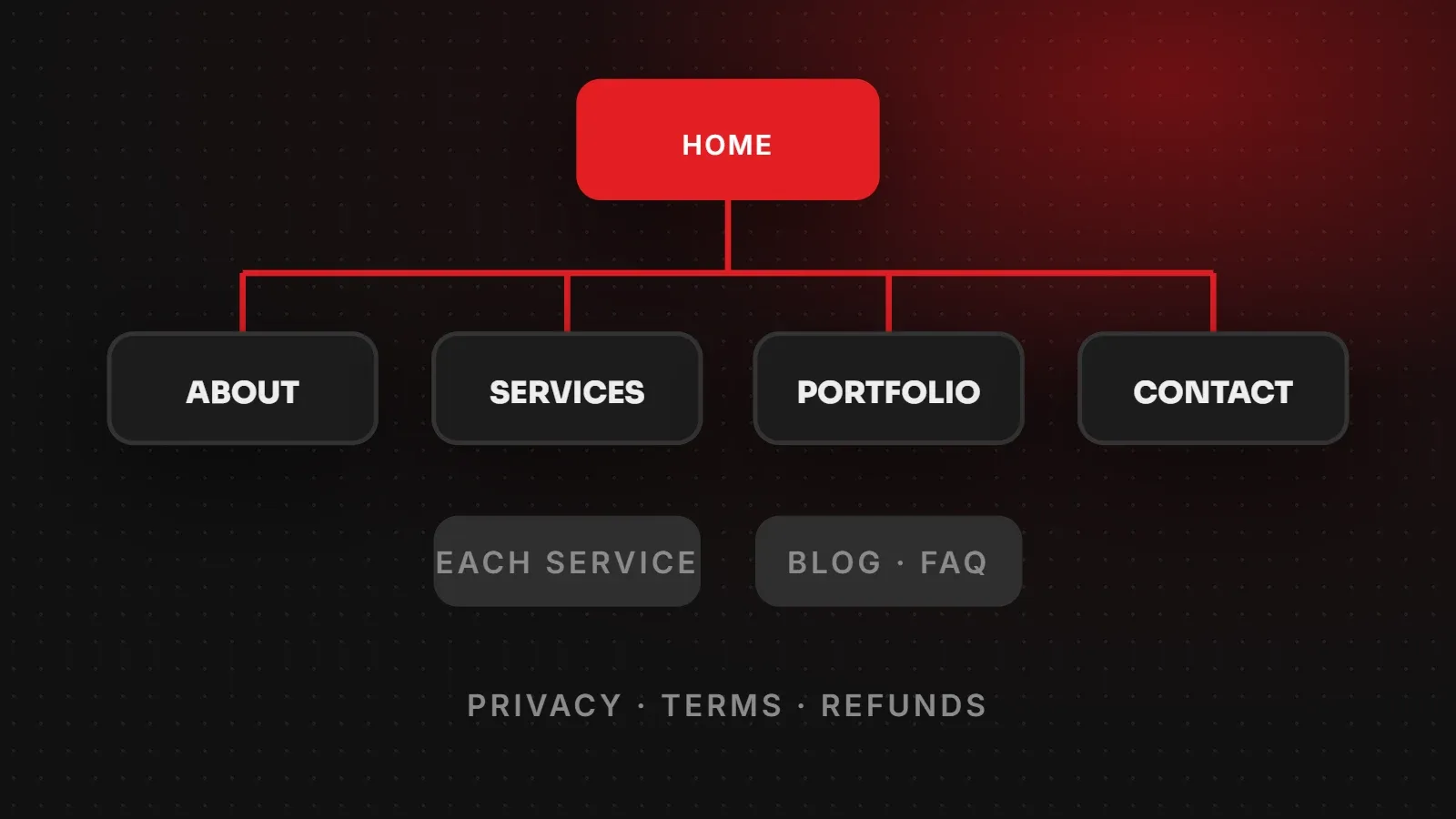
Most small business websites need five core pages: Home, About, Services (or Products), Contact and a Privacy Policy. Adding a separate page for each main service, a portfolio or case studies page, an FAQ and a blog helps you rank on Google and win trust. This checklist explains the essential pages for business website success and what to put on each.
- Start with Home, About, Services, Contact and legal pages.
- Give each main service its own page so it can rank for its own searches.
- Every page should have one clear next step, such as "Get a quote" or "Chat on WhatsApp".
Essential pages for business website success
| Page | Purpose | Must include |
|---|---|---|
| Home | Explain what you do in seconds | Clear headline, main services, proof, call to action |
| About | Build trust | Story, team, experience, location |
| Services / Products | Show what you sell | Overview with links to each service or category |
| Contact | Make it easy to reach you | Form, phone, WhatsApp, address, map, hours |
| Privacy Policy | Legal and trust | What data you collect and how you use it |
Recommended pages that help sales and SEO
- Individual service pages: one page per service, for example "Corporate Website Design" and "SEO Services". Each can rank for its own search terms.
- Portfolio or case studies: real projects with results.
- Testimonials or reviews: genuine feedback from real customers.
- Pricing: packages or starting prices reduce time-wasting enquiries.
- FAQ: answers to common questions, which also appear in Google results.
- Blog or guides: helpful articles that bring search traffic.
- Location pages: for businesses serving several cities, one page per city with unique content.
Extra pages for online stores
- Shipping and delivery information
- Returns, refunds and exchange policy
- Terms and conditions
- Size guides where relevant
- Order tracking
Payment providers often ask for these pages before approving a merchant account. See our JazzCash and Easypaisa guide.
What to put on each page
- A clear heading that says what the page is about.
- Useful content that answers the visitor's questions.
- Proof: photos, examples, reviews or numbers.
- One main call to action, repeated where it makes sense.
- A unique meta title and description. See our meta length guide.
For the About page specifically, see our guide on how to write an About Us page. Planning a new site? Read our website brief checklist.
Frequently asked questions
How many pages should a small business website have?
Usually 5 to 15: the core pages plus one page per main service and a few supporting pages.
Is a one-page website enough?
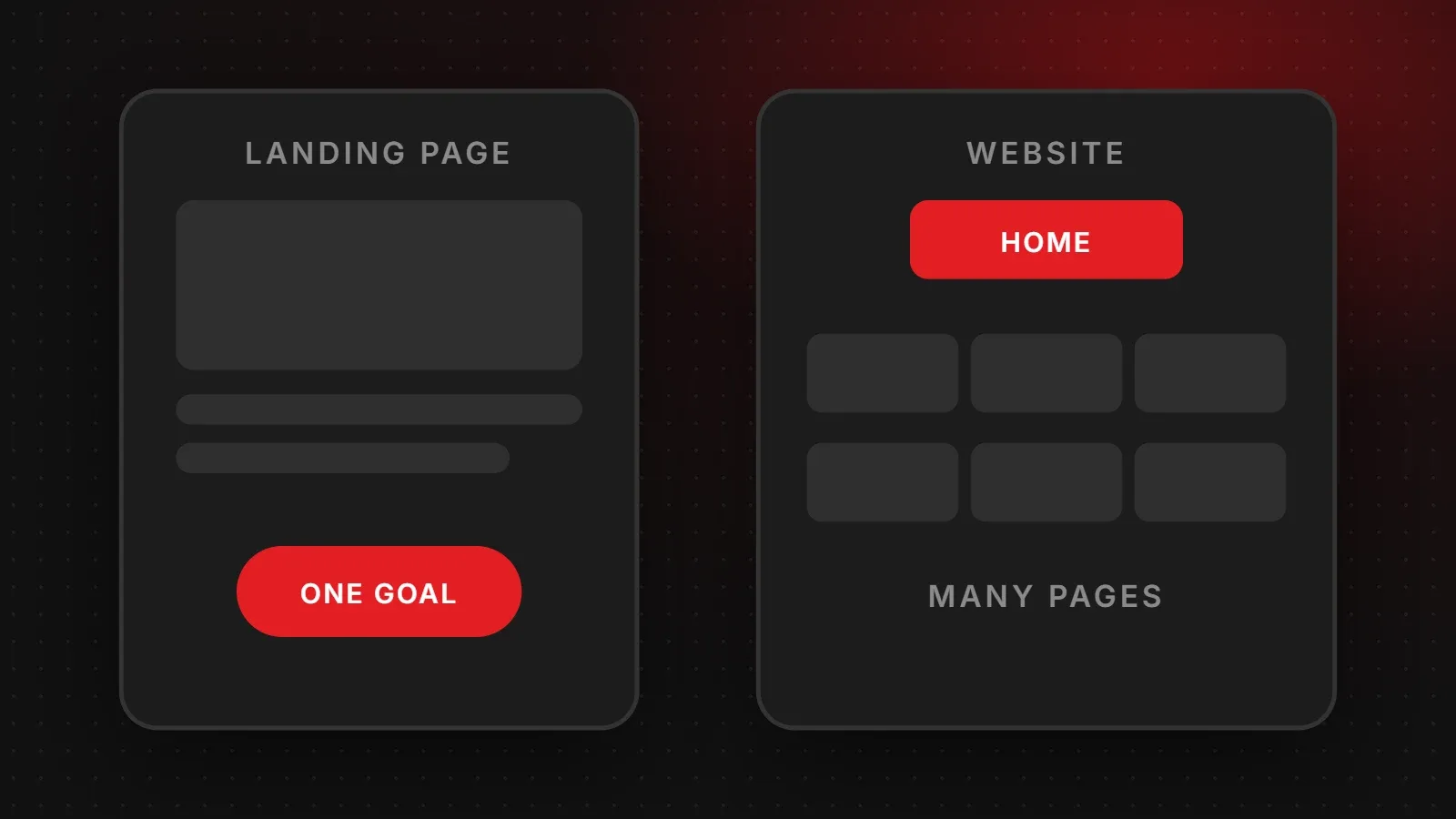
For a simple event or single product, sometimes. For most businesses, separate service pages rank and convert better.
Do I need a privacy policy?
Yes, if you collect any personal data, such as through contact forms, analytics or online orders.
Should I add a blog?
A blog helps if you can publish useful articles regularly. It brings search traffic and answers customer questions.
Ready to plan your website?
We plan page structures, write content and build business websites that turn visitors into enquiries. See our pricing or get a free consultation. For guidance on helpful content, see Google's helpful content guide.
Written by the ItsWebExpert team, a web design and development company in Karachi building websites, online stores and apps for businesses across Pakistan.
Ask a Question on WhatsApp